Connect any screen
Browser-first on compatible smart TVs, with optional players for screens that need them.

One place to run every screen across one shop or a thousand — menus, promotions, video walls, whole campaigns.
No stick needed. If your TV has a browser, open a page, type a code, and that screen is yours to control.
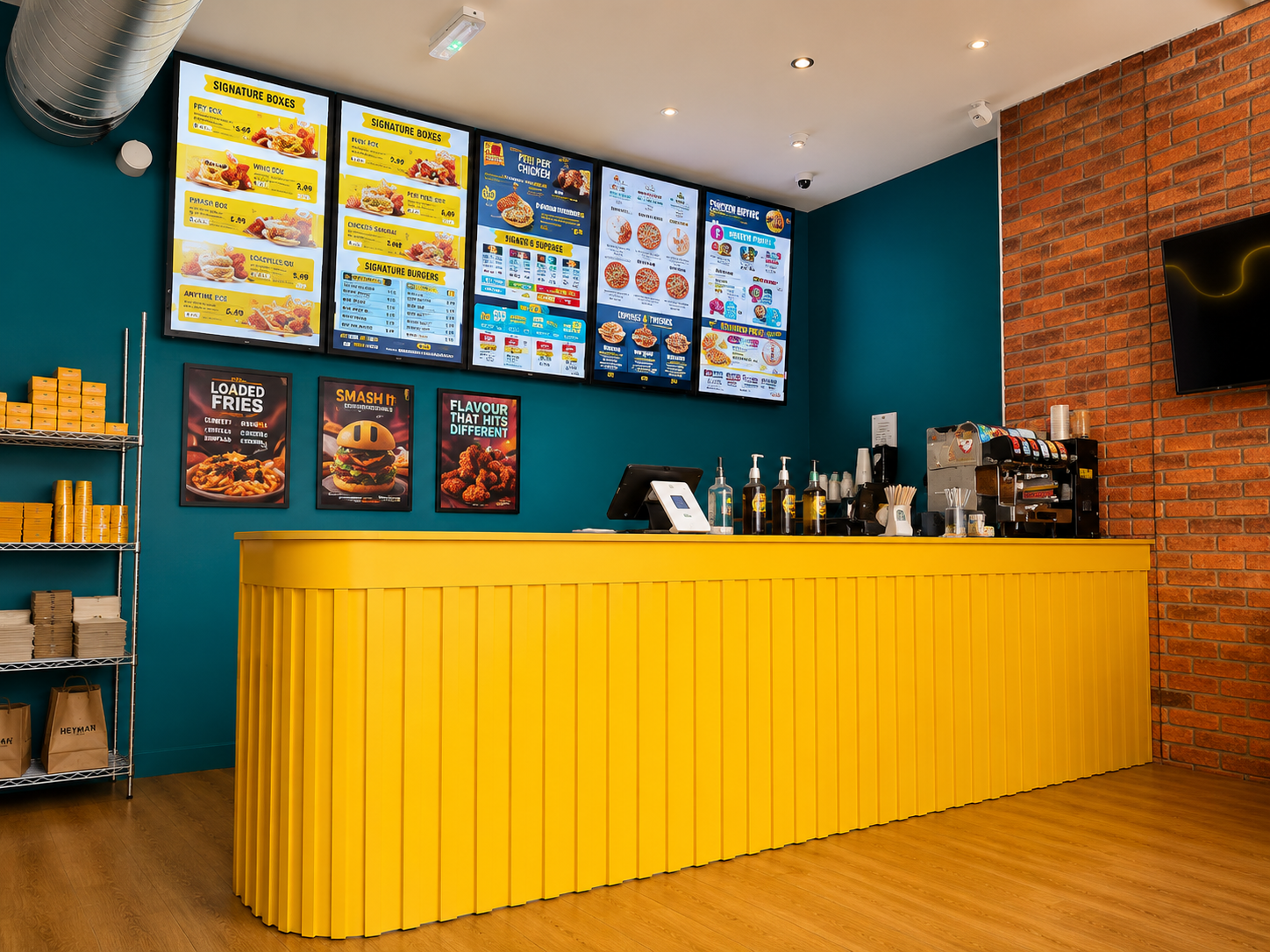
Ordinary signage is upload, schedule, display, repeat. GhostScreen works the other way round: understand the business, decide what should be shown, show it, then see what happened.
Browser-first on compatible smart TVs, with optional players for screens that need them.
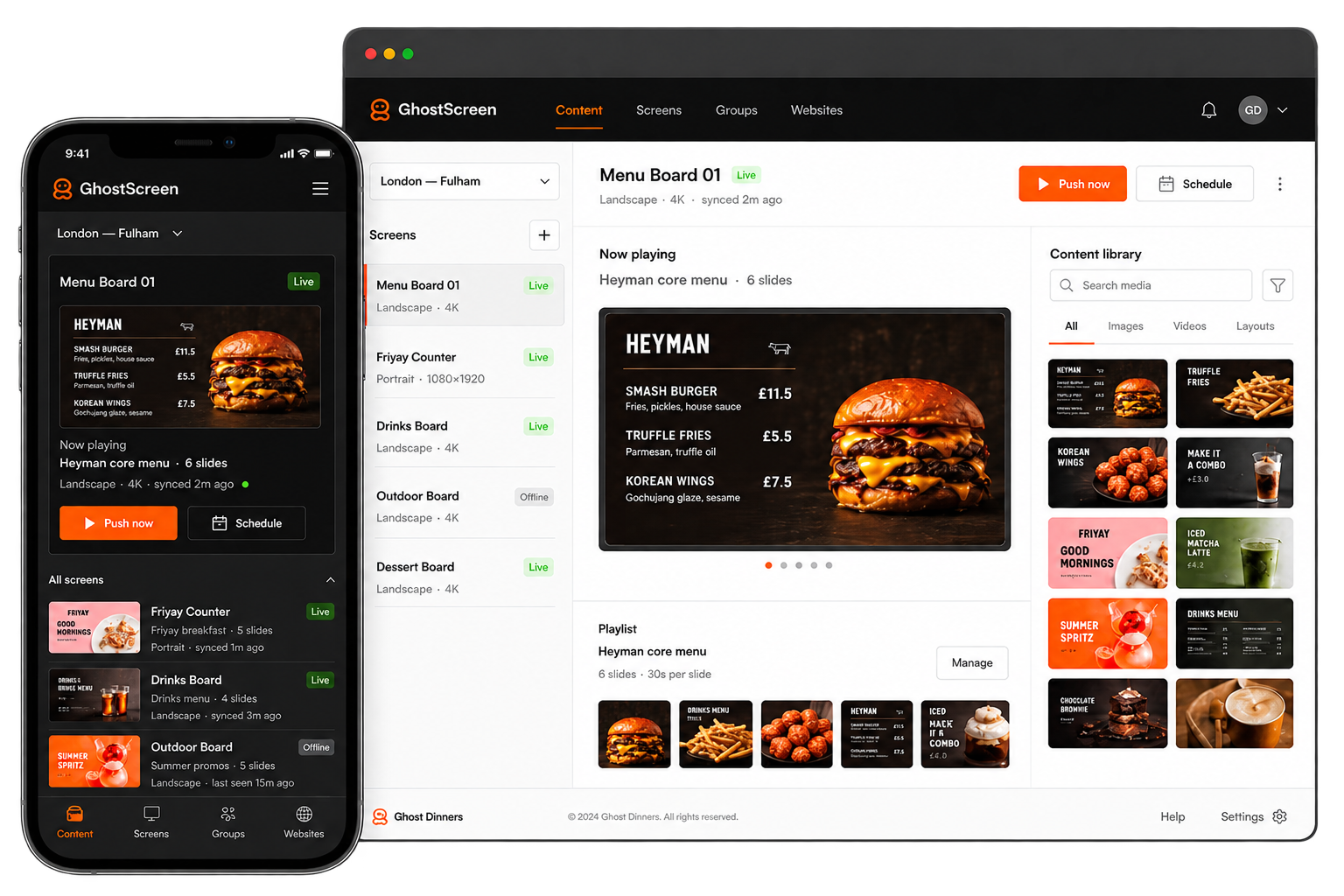
Screens, locations, groups, playlists, media and campaigns from one dashboard.
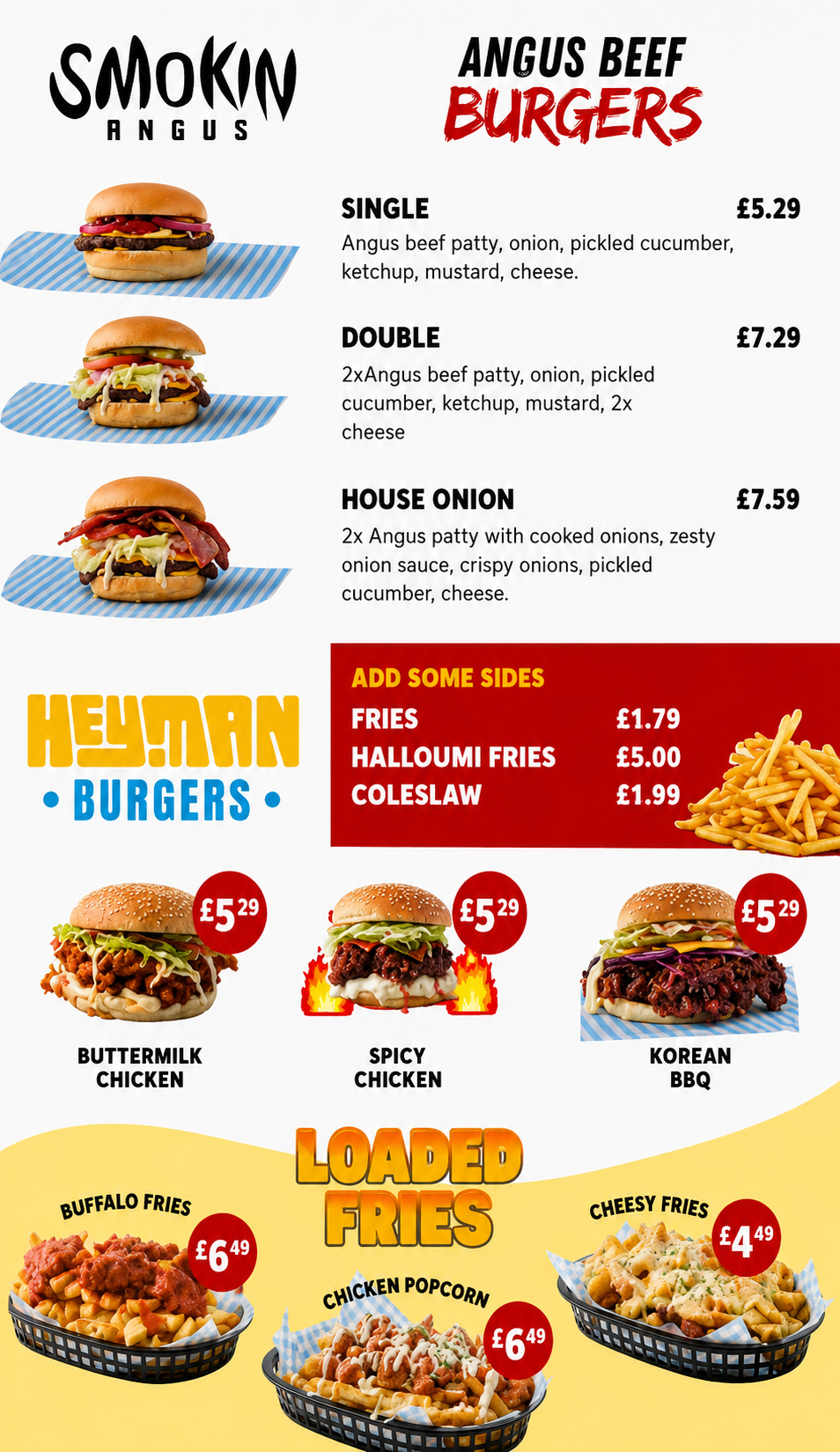
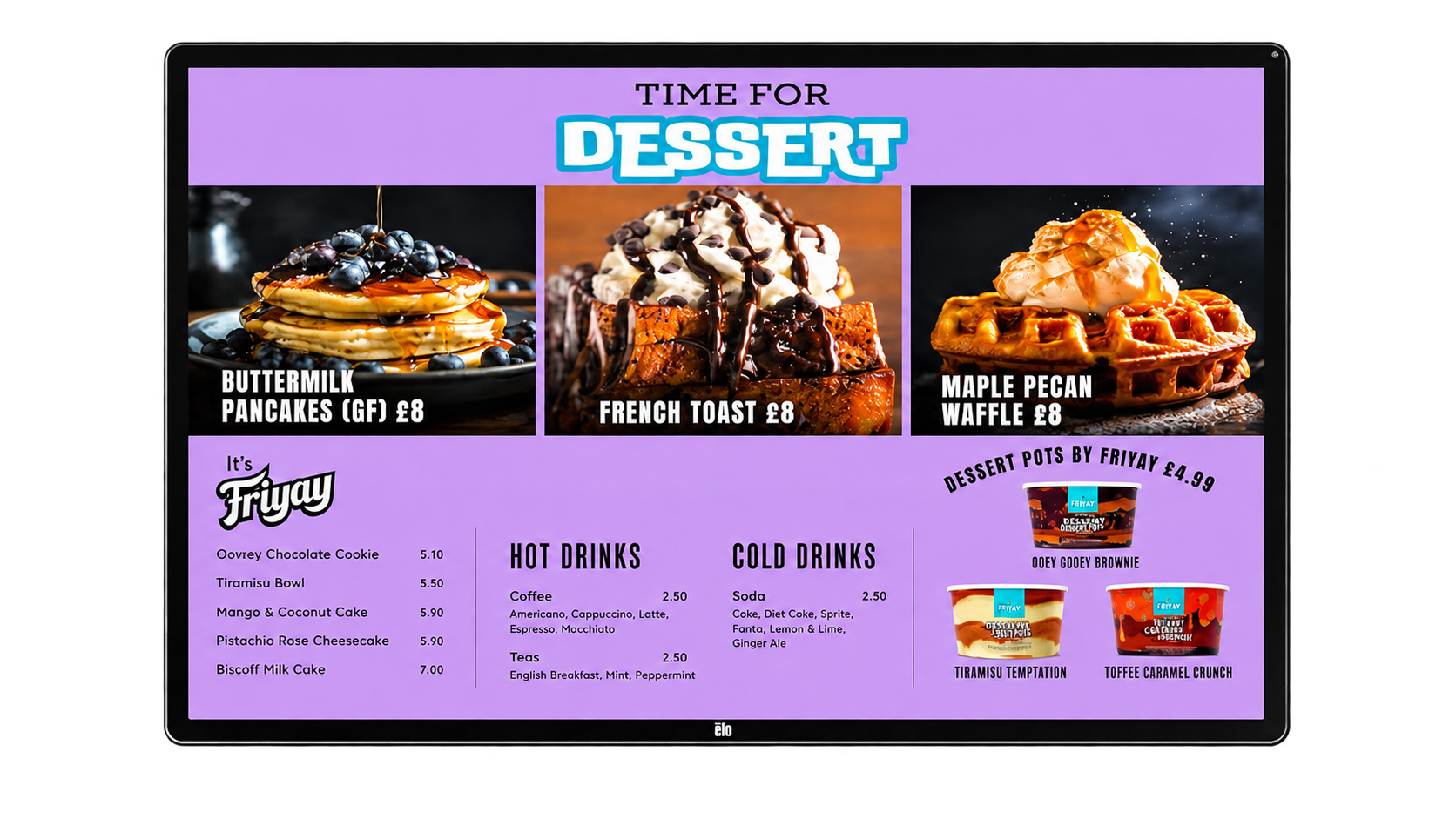
Menus, promotions, images, video, branded content and synchronised experiences.
Schedule by time, day, daypart, campaign and location.
Screen groups, synchronised playback and multi-display video walls.
POS and business data drive menus, availability and what gets promoted.
Connect a screen in three steps — usually without buying anything.
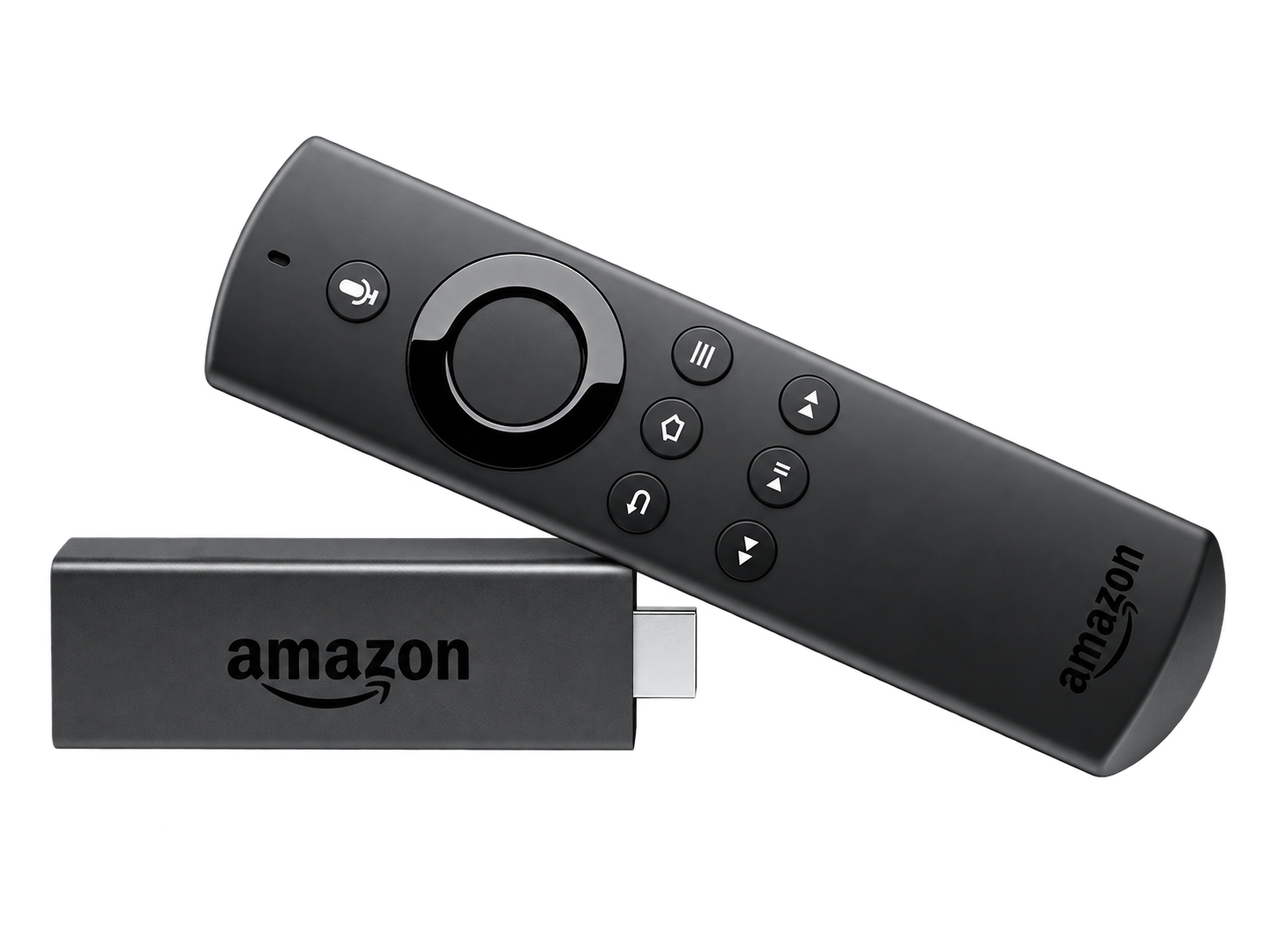
On a compatible TV, open the browser and go to the GhostScreen player. Older screen? Plug in a stick or player instead.
A six-digit code appears. Type it into the dashboard and that screen is connected — nothing installed, no technician.
Build playlists, group screens, schedule by daypart — and let connected data keep the board honest on its own.
Why the frame is a drop target
Drag a photo of the real display — or an artwork export — onto the screen above and it becomes that screen's preview, stored against it. It's how you show a client their own site, and how a manager approves artwork before it pushes.
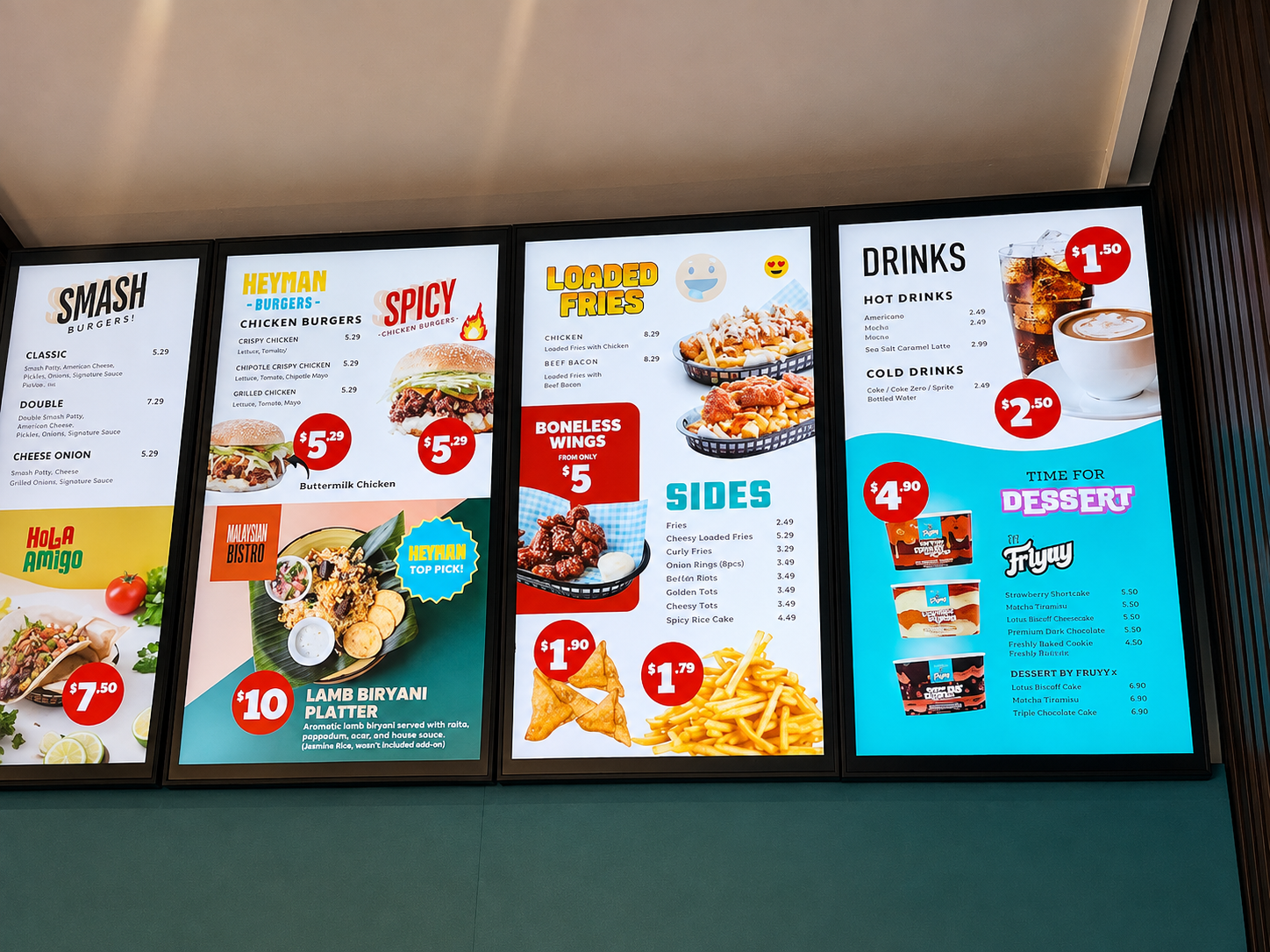
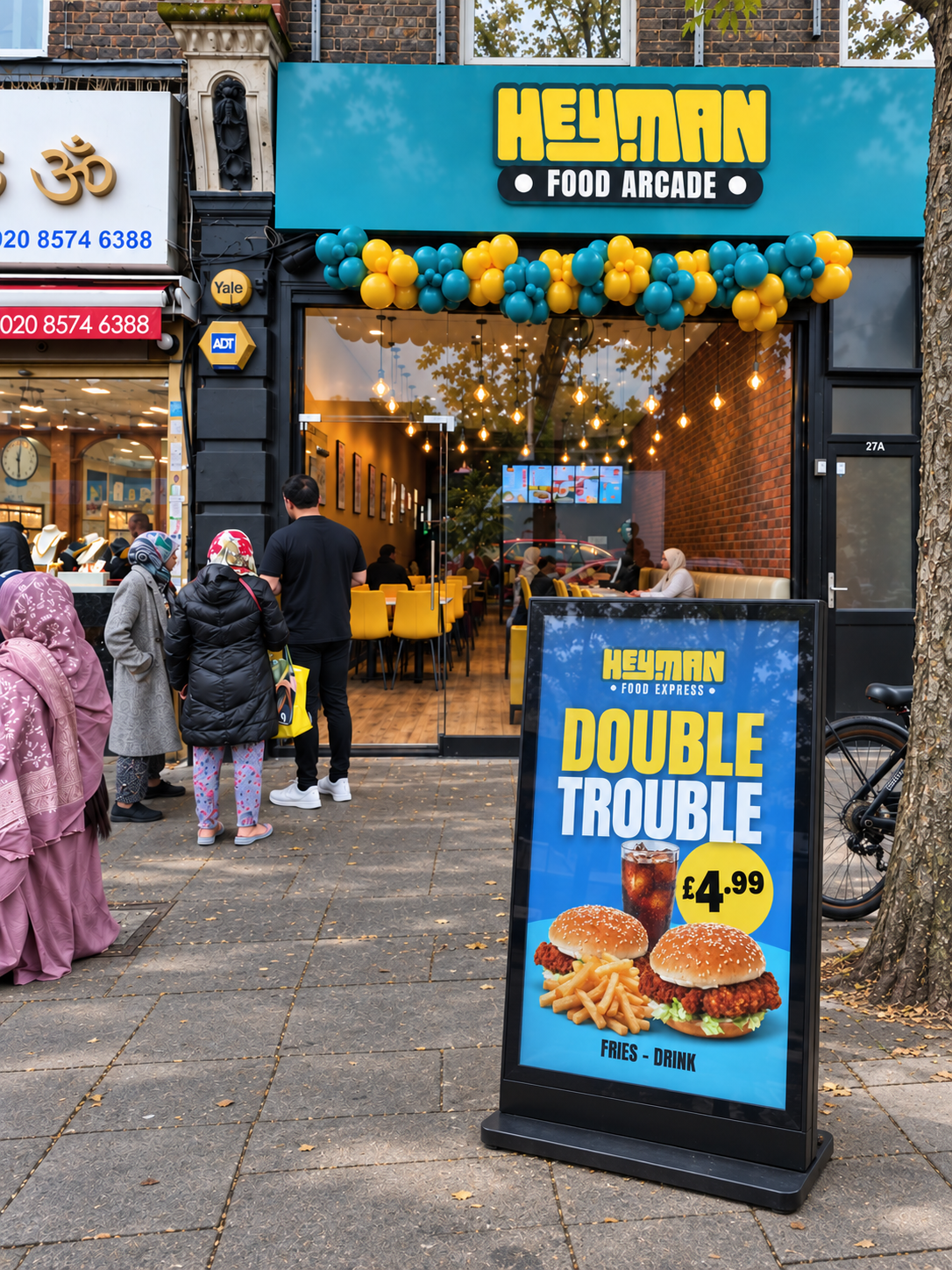
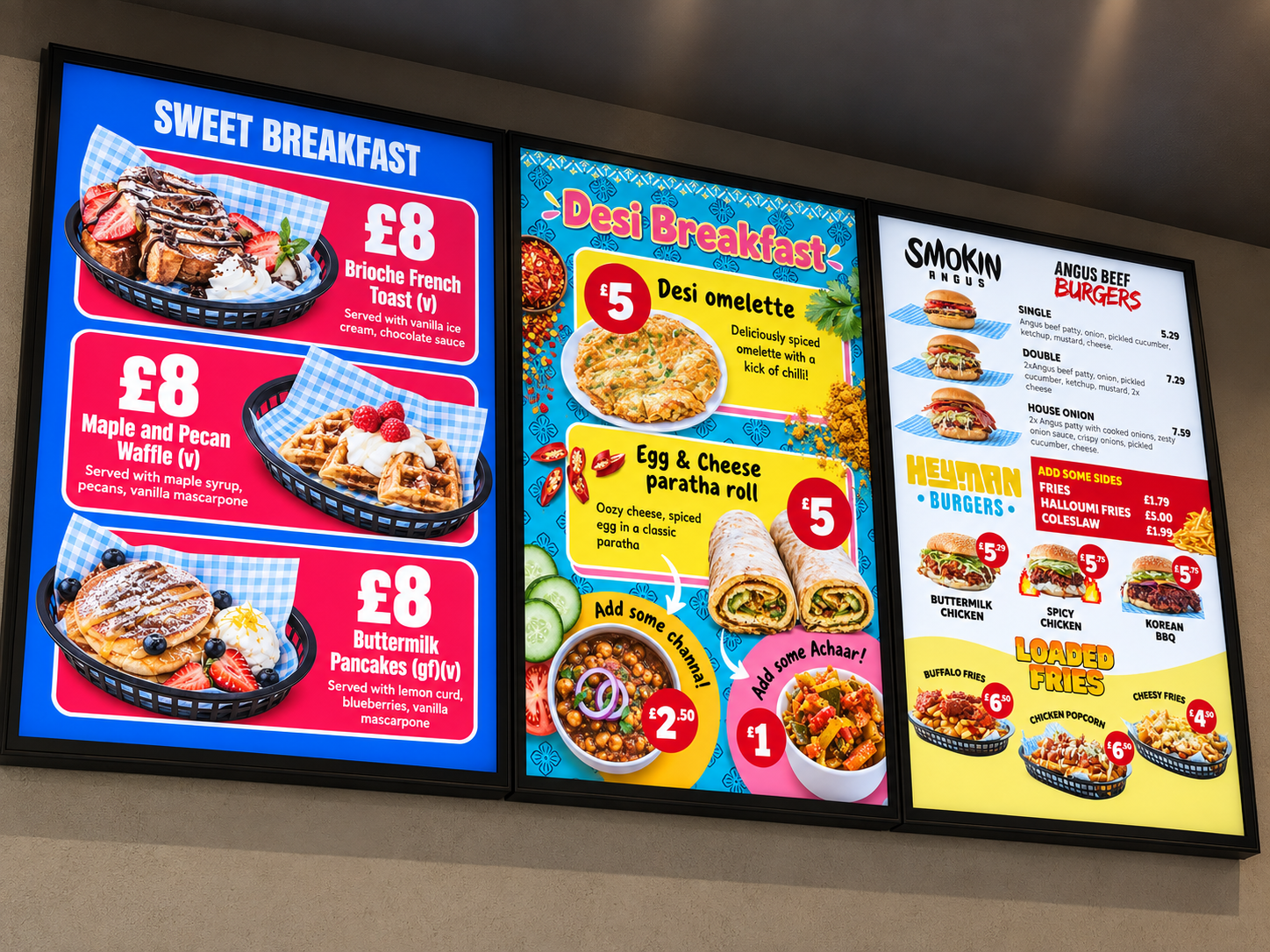
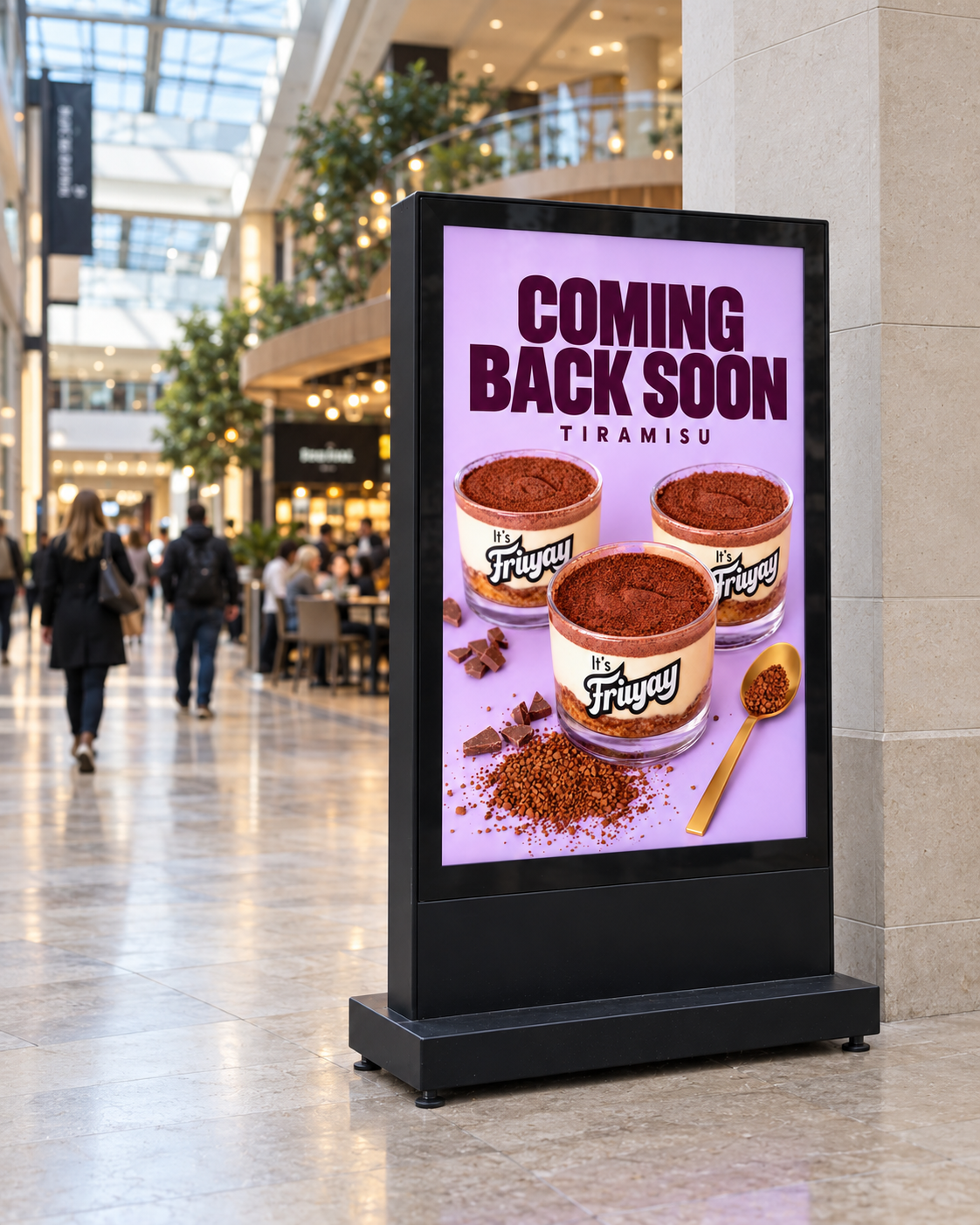
GhostScreen reads the same data as menus, pricing, availability and promotions, so rules replace re-exporting artwork. Slice is the first outside system we're connecting — a pizzeria's menu and orders already live there.
Out of stock in the kitchen, off every board at that site.
Schedules per screen, group or brand — one clock across ordering and signage.
Publish to a group; every paired display updates together, with proof of play.
Boards render from platform pricing, so no screen disagrees with the till.
Browser-first on compatible smart TVs, with optional players where a screen needs one. Nothing installed, no technician, no VPN.
 Screen paired
 Three screens, one site, nothing installed
Brands, locations, screen groups and individual screens in one hierarchy — with media and playlists reused across all of them.
 Preston · live
 Brand → location → group → screen
Build playlists from images, video, web content and live menu blocks, laid out per orientation.
Playing · dinner menu One playlist, rendered per screen
Schedule by time, day, daypart, date range, campaign or location — per screen or across a whole group.
11:30–14:30 · running One clock across ordering and signage
Combine displays into a single synchronised canvas so content spans the wall — without specialist signage thinking.
The customer sees one wall, not four TVs
The part we're building toward: the board decides for itself, because it can read what's actually happening behind the counter.
Sold out · item pulled Signage that's measurable, not decorative
Most signage starts by selling you another computer. Ours doesn't. If the screen has a decent browser, open the GhostScreen page, enter your code, and it's connected.
Older screen, poor browser, or you'd rather have a dedicated player? Plug one in. We support those too — we just don't make you buy one.
Your screens. Your hardware. Your choice.
If the screen has a modern browser, that's your player. Open the page, enter the code, done.
Already have a Fire TV Stick or Android player? Keep it. Or add one where the TV's browser won't do.
Same idea as the stick, but wired — better where the wifi is patchy or the screen is on all day.
For a wall of five or six panels that has to stay perfectly in step, and for estates with an AV contractor.
A restaurant can run GhostScreen alone. Screens are the cheapest door into a venue.
One site, every screen in it, live in a week.